What Changed on March 16, 2026 and Why It Matters
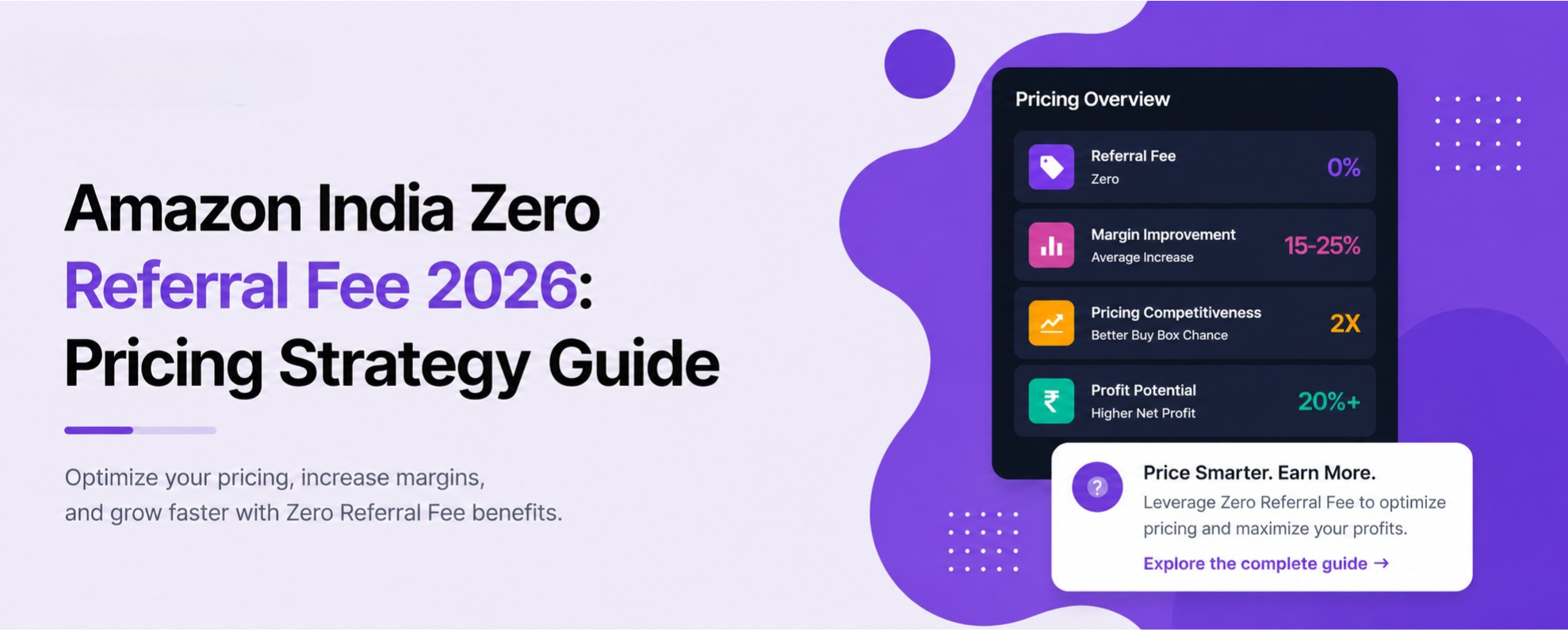
Amazon India made its largest seller-facing fee cut in the history of the India marketplace on March 16, 2026. Products priced up to ₹999 (inclusive) in over 1,800 categories now attract zero referral fee. Previously, sellers were paying 5 to 12 percent of the selling price as a referral fee on every transaction money that went directly to Amazon before you even calculated your own margin.
For a seller doing 500 units a month at ₹799 in a category with an 8 percent referral fee, that was ₹31,960 per month leaving your account in referral fees alone. From March 16, 2026 that number is zero.
The referral fee is the percentage Amazon charges on each completed sale separate from FBA fees, Easy Ship fees, and storage. Zero referral fee means that specific component drops to zero for qualifying ASINs. All other fees remain unchanged.
This is a permanent fee change not a promotion. Amazon India structured it as part of a broader push to compete with Flipkart's fee structure and accelerate onboarding of new sellers from tier-2 and tier-3 cities.
Which Categories and Products Are Affected?
The zero referral fee applies broadly across product categories where the listed price is ₹999 or below. The affected categories include most everyday consumer products. Here are the most commercially significant ones:
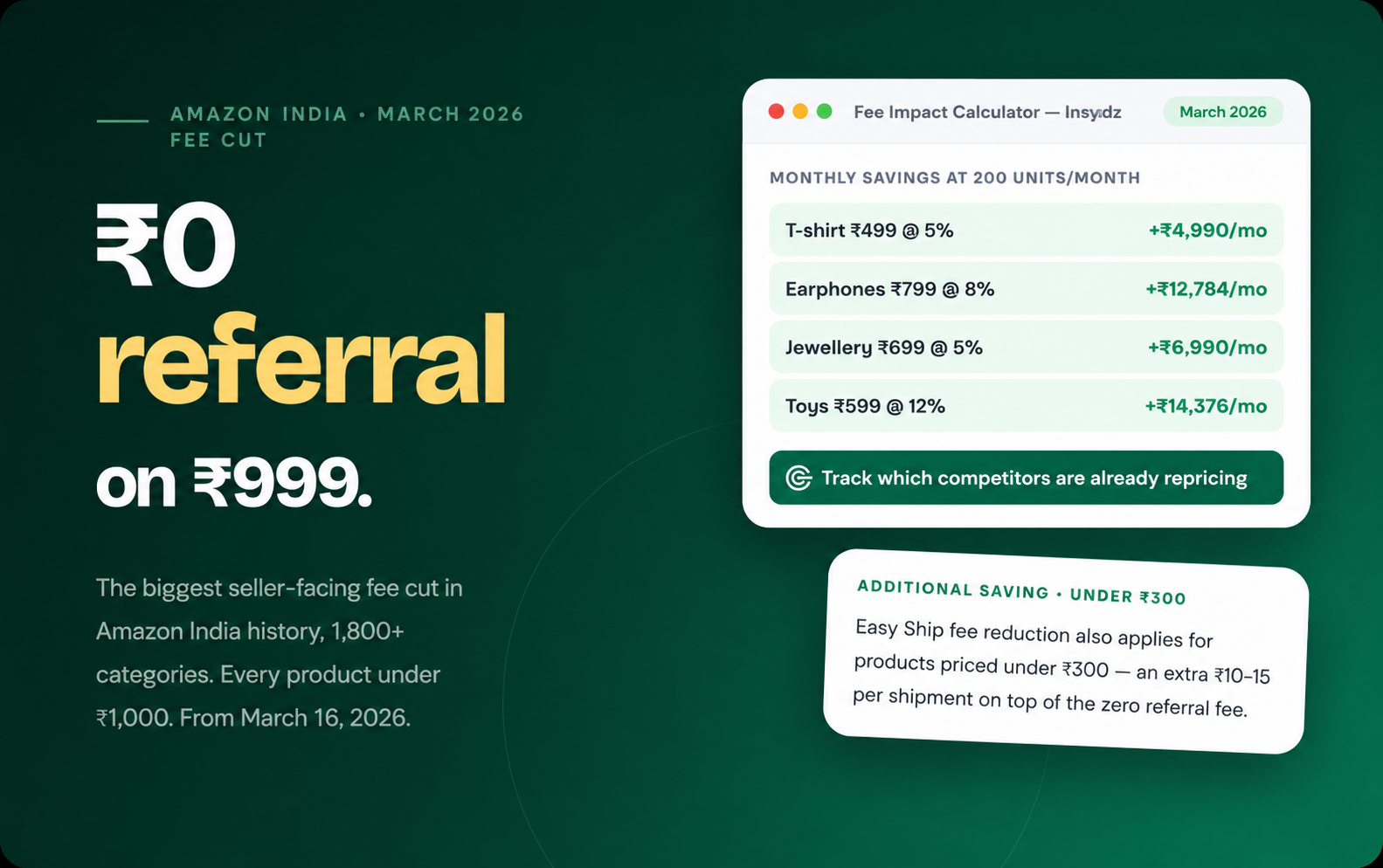
Amazon India zero referral fee impact monthly savings at 200 units for four common sub ₹1,000 product types. An earphones seller saves ₹12,784 per month in referral fees from March 16, 2026.
The Real Math: How Much Extra Profit Per Unit?
Here are three concrete before-and-after unit economics examples. These use actual typical fee structures for each category prior to March 2026. FBA fees are unchanged.
Example 1: Fashion T-shirt priced at ₹499
Example 2: Earphones priced at ₹799
Example 3: Fashion jewellery priced at ₹699
Should You Drop Your Price to ₹999 or Pocket the Margin?
This is the central strategic question and the answer is not the same for every seller. There are two distinct scenarios depending on where your product is currently priced.
Scenario A: Your product is already priced below ₹999
The fee saving arrives automatically. You now have a choice: hold the current price and improve your net margin, or pass part of the saving to buyers through a price reduction to gain ranking and Buy Box share. The right choice depends on how competitively priced you already are and whether your category is seeing competitor repricing.
Scenario B: Your product is priced between ₹1,000 and ₹1,199
This is the highest-value decision point. Repricing from ₹1,099 to ₹999 gives you two simultaneous advantages: zero referral fee on the new price, and access to the powerful sub-₹1,000 price psychology that drives significantly higher conversion rates among Indian buyers.
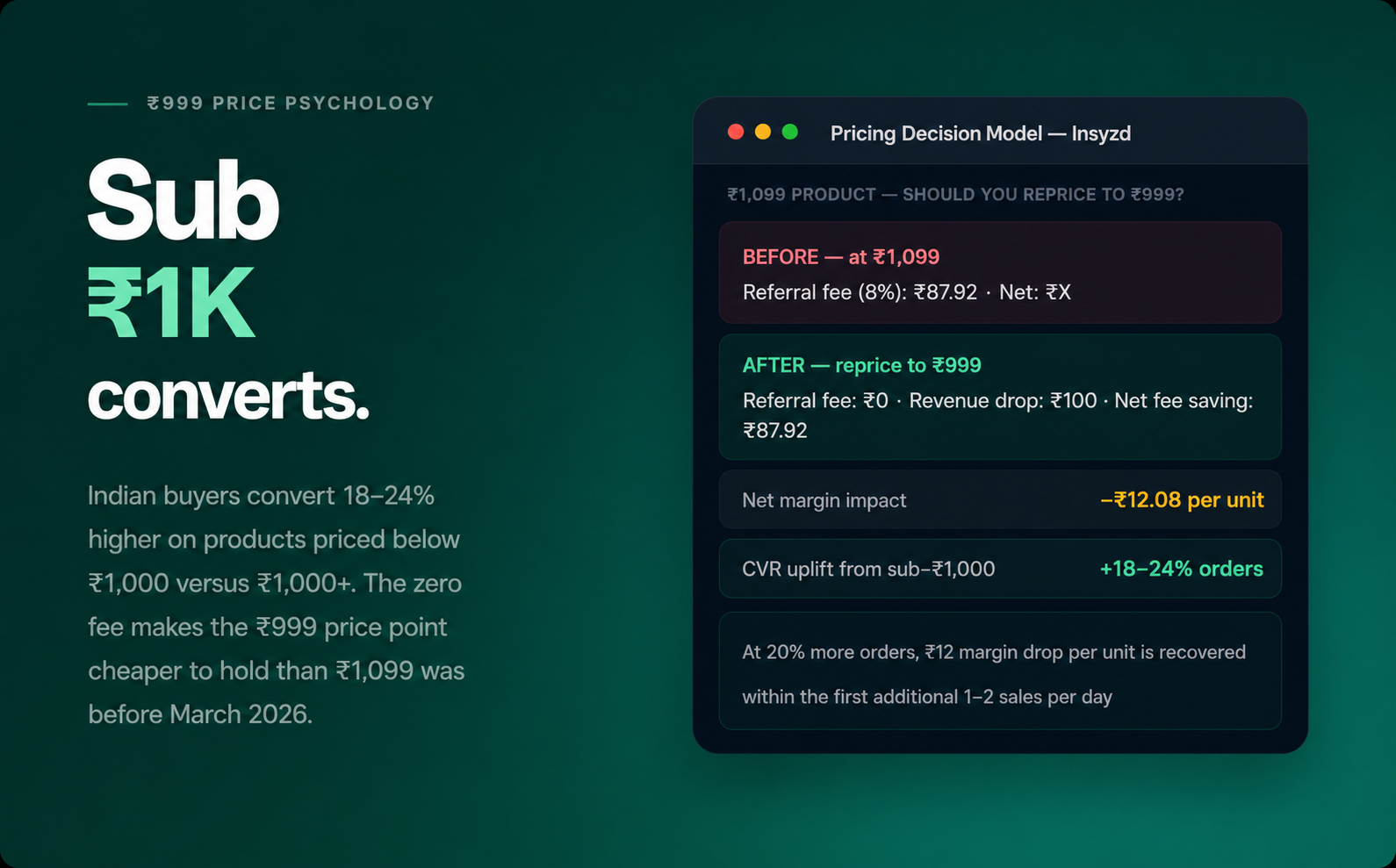
Pricing model for a ₹1,099 product repriced to ₹999 the fee saving of ₹87.92 nearly offsets the ₹100 price drop, and the conversion rate uplift from sub-₹1,000 pricing more than compensates at typical Indian marketplace volumes.
Track how competitors are repricing after the fee cut
Insydz shows competitor price changes across your category in real time. See who moved and by how much — and decide your response before the market settles.
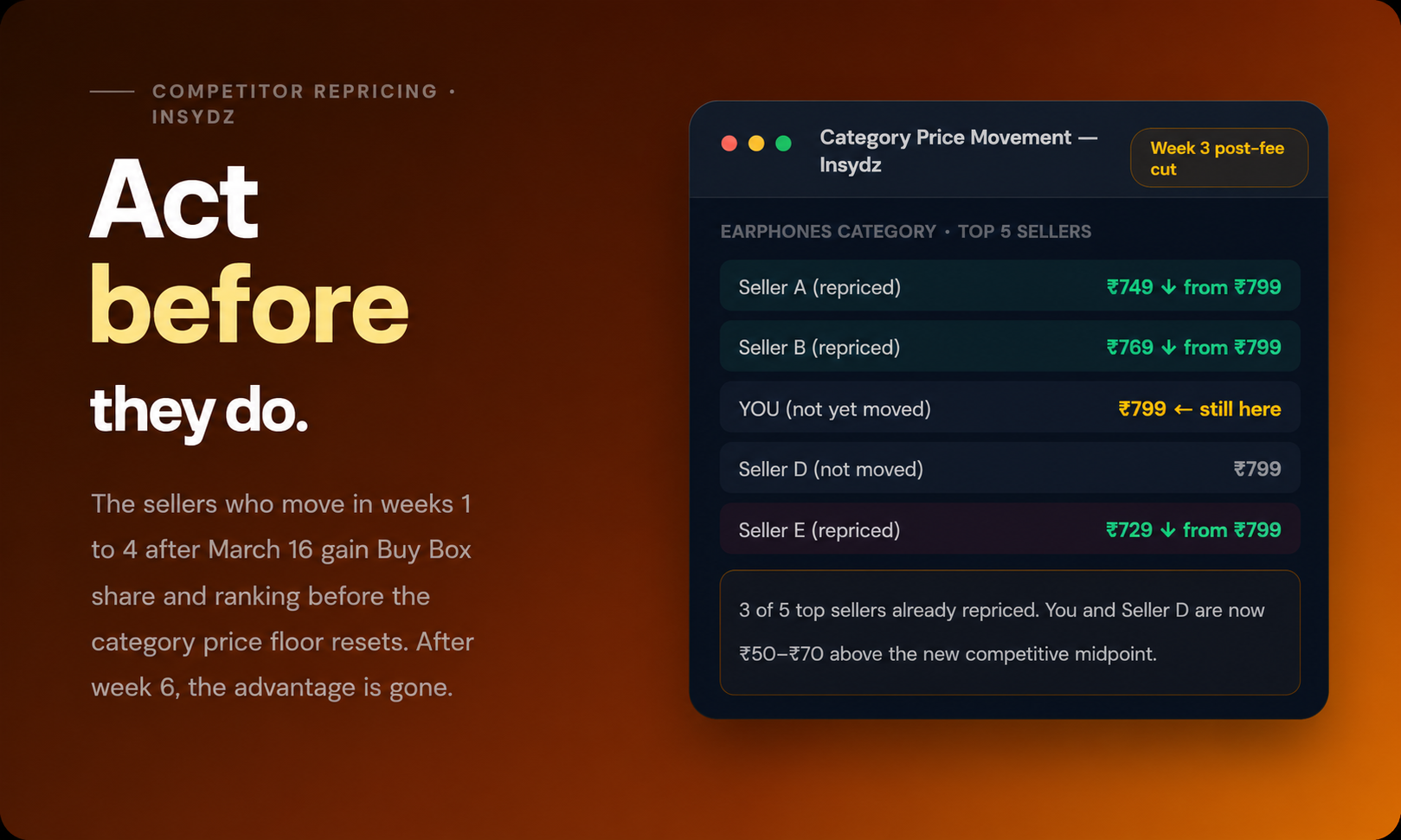
Insydz category price tracking 3 of the top 5 sellers in an earphones category have already repriced downward after the March 2026 fee cut. Sellers who have not moved are now ₹50 to ₹70 above the competitive midpoint.
The Hidden Opportunity: Reinvest the Freed Margin Instead of Discounting
Dropping price is the most obvious response to the fee saving. It is not always the best one. For sellers who are already competitively priced and winning their Buy Box, the smarter move is reinvestment.
Reinvest into Sponsored Products
A ₹12,784/month fee saving on an earphones ASIN at 200 units is exactly enough to run a competitive Sponsored Products campaign. More ad spend → more visibility → more organic rank → more sales. The freed fee compounds through the ad flywheel.
Build Stock Depth
Sellers who run out of inventory during a sales surge lose ranking that takes weeks to rebuild. The freed margin is an FBA inventory buffer fund. Buy 30 to 50 extra units now and never lose ranking to stockouts again.
Pass Some to Price, Keep Some
A split reinvestment approach: drop price by half the fee saving (e.g. ₹799 → ₹769) and keep the other half as margin improvement. You gain ranking and Buy Box competitiveness while also improving unit economics.
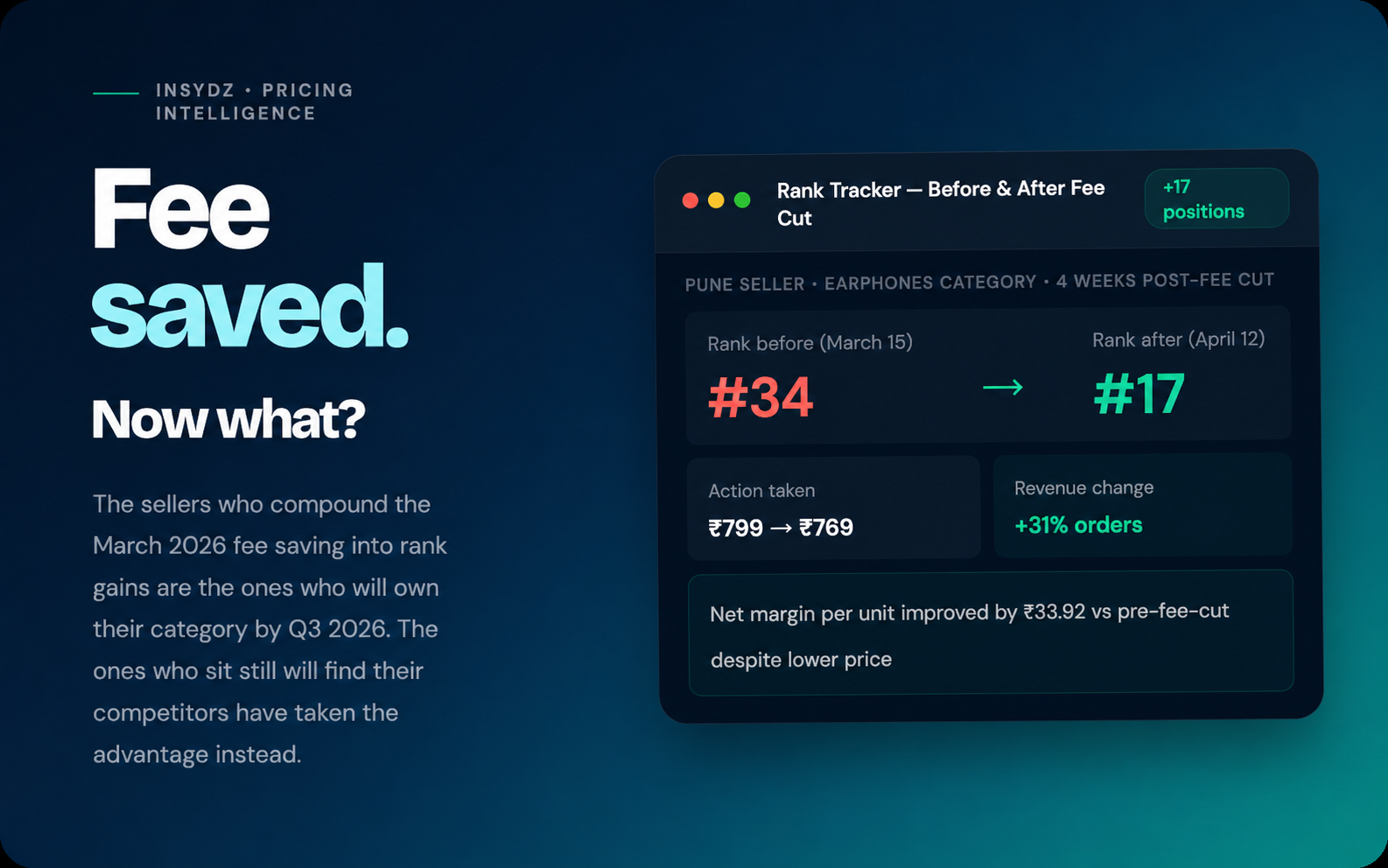
Insydz rank tracking a Pune earphones seller moved from #34 to #17 in 4 weeks after March 2026 by repricing from ₹799 to ₹769. Revenue up 31%, unit margin up ₹33.92 versus the pre-fee-cut baseline.